Beefsteak history
What is a Beefsteak dinner?
A beefsteak is a communal American tradition built around steak, beer, and eating with your hands.
A 19th-century New York tradition
The Beefsteak became a New York dining tradition during the 19th century and reached its heyday between the mid-1800s and World War I. Early gatherings often took place in taverns, cellars, workshops, and other deliberately plain rooms. Guests sat on crates, stools, or barrels instead of settling into a formal dining room. The setting made the point immediately: this was not a banquet designed for polished manners.
Some of the best surviving records come from the William S. Miller Papers at the South Street Seaport Museum. Anton W. Miller, a tavern keeper sometimes credited as a central figure in the New York tradition, became known for broiling beefsteaks over hickory. His son William continued preparing dinners in a Manhattan carpentry shop. Clubs, businesses, political groups, and friends hired the Millers to stage the feast in what period invitations called the old original style.
No forks, no knives, no pretense
The rules were simple because the rules were the fun. Beef arrived in repeated rounds, often on bread that caught the juices. Diners ate with their hands. Ale or beer circulated freely. Aprons protected good clothes and doubled as napkins. The lack of utensils was not an inconvenience to solve; it was the ritual that turned a roomful of people into participants.
That physical, slightly unruly format is why a Beefsteak feels different from a steak dinner. Everyone is doing the same unusual thing at the same time. Rank and formality soften. Conversation gets louder. The meal creates its own momentum, one tray of steak after another.
Clubs, politics, business, and a good story
Beefsteaks were social events, but they were also useful gatherings. Business associates hosted them. Political and fraternal organizations used them to rally members. Regular Beefsteak clubs formed around the format. The setting was casual enough to loosen a room and distinctive enough to make attendance feel like belonging to something.
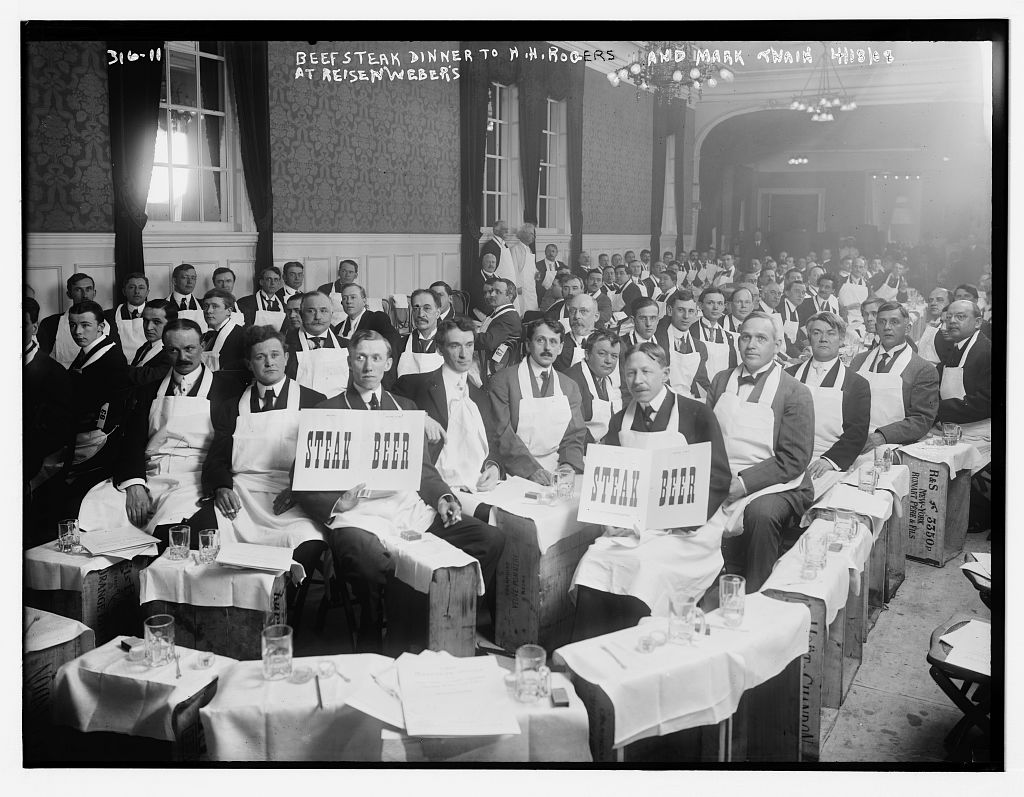
A famous 1908 photograph from Reisenweber’s restaurant captures that combination perfectly. Rows of guests wear white aprons over suits while two men in front hold blunt signs reading “STEAK” and “BEER.” The dinner honored industrialist H. H. Rogers and Mark Twain, yet its message was gloriously uncomplicated. More than a century later, the image still explains the appeal in two words.
The tradition evolved
Bigger rooms. Wider circles. Same appetite.
Early accounts often describe Beefsteaks as all-male affairs. Later dinners moved into restaurants, hotels, and rooftops and welcomed women as guests and organizers. Surviving correspondence in the Miller collection suggests that the real story was more varied than the simplest retellings imply.
The craze eventually faded in New York, but it never vanished. Beefsteak dinners remained part of community and fundraising culture in New Jersey, preserving the core formula of abundance, informality, and a room gathered around the same shared feast.
The Indianapolis chapter
An old feast, raised here.
Indy Beefsteak carries the essential ritual into a modern Beefsteak dinner in Indianapolis: steak served in waves, cold beer, butcher-style aprons, no utensils, and time for a group to settle in together.
Our version is built around grass-fed, grass-finished beef sourced from an Indiana farm. We host private gatherings, employee appreciation events, client entertainment, and corporate events for groups of 20 or more at Indianapolis-area partner venues or at a suitable customer-provided location.
The setting may be Indiana and the guests may arrive in 2026, but the reason it works is the same one that filled those New York rooms more than a century ago: good meat, cold drinks, fewer rules, and a shared story before the night is over.
History sources & photo records
- Museum of the City of New York: overview based on the William S. Miller Papers.
- South Street Seaport Museum: the Miller Family Beefsteak Dinner Collection.
- Library of Congress: 1908 Reisenweber’s photograph and rights record.
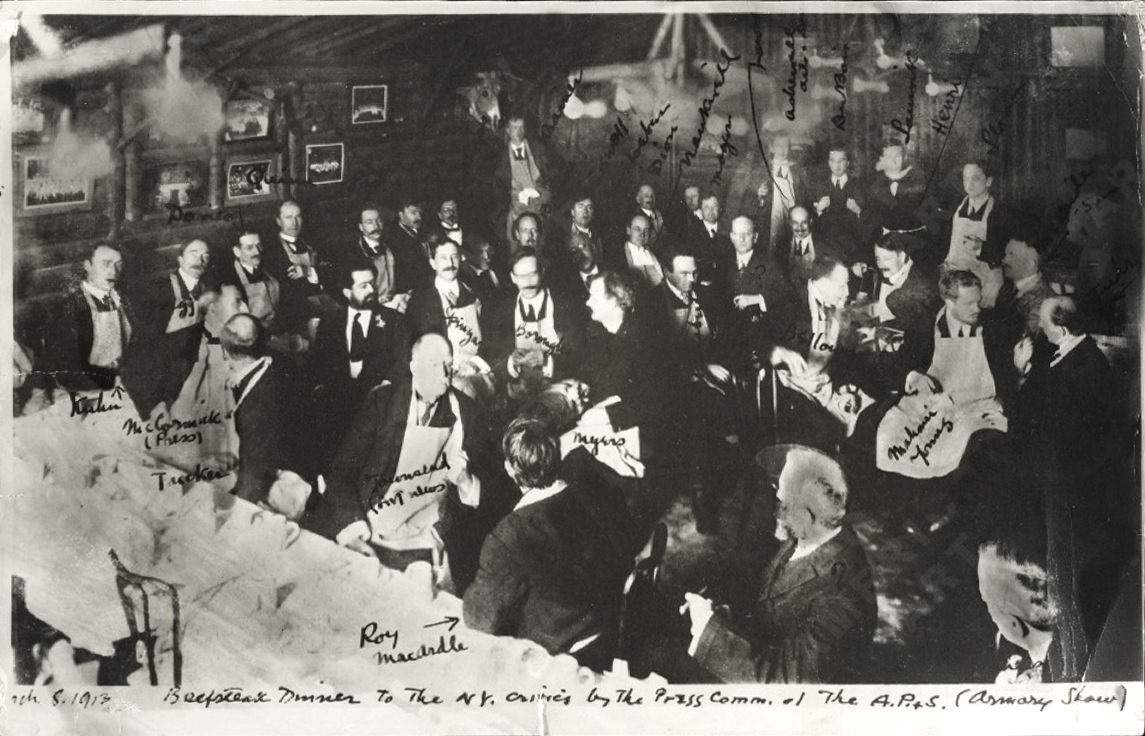
- Smithsonian Archives of American Art: 1913 Armory Show Beefsteak photograph.